4 Sep 2026
The Intersection of Audio Engineering and Player Immersion in Live Dealer Environments for Remote Table Sessions
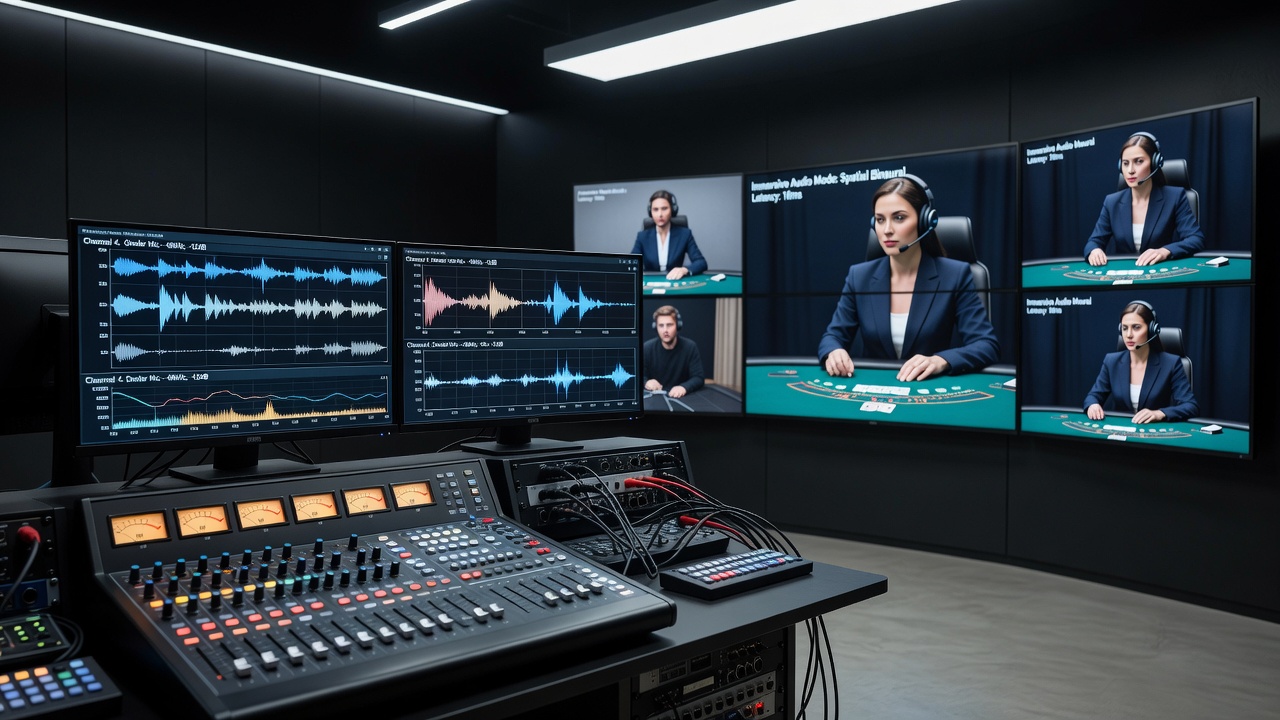
Live dealer environments transmit real-time video and audio from professional studios to remote participants engaged in table games such as blackjack, roulette, and baccarat, and audio engineering forms a core component of how participants perceive presence within those sessions. Engineers position multiple microphone arrays around tables to capture dealer voices, card shuffles, chip stacks, and ambient room tones while routing signals through digital mixing consoles that balance levels and apply equalization to reduce unwanted noise.
Studies on virtual presence indicate that synchronized audio cues strengthen the sense of spatial location for remote users, because sound travels at different speeds than light and provides timing references that video alone cannot deliver. In September 2026 industry reports from the American Gaming Association highlighted increased adoption of object-based audio formats in live dealer streams, where individual sound sources receive separate metadata tracks that allow end-user devices to render them according to listener position.
Core Audio Engineering Techniques Applied in Live Dealer Studios
Engineers employ close-miking on dealer microphones combined with boundary microphones embedded in table surfaces to isolate speech from background activity, and they route these feeds into low-latency digital audio workstations that compensate for network jitter before packets reach player devices. Spatial audio rendering then maps these sources onto a virtual soundstage, so a player wearing headphones hears the dealer’s voice centered while peripheral sounds such as roulette wheel spins appear to originate from the sides.
Research conducted at the University of Nevada, Las Vegas demonstrated that participants exposed to properly spatialized audio reported higher ratings of co-presence compared with mono or stereo mixes, because the brain integrates inter-aural time differences and level differences to construct a three-dimensional acoustic environment. Data compression algorithms must preserve these timing cues, which explains why many operators now transmit at bit rates above 256 kbps for audio streams even when video uses more aggressive codecs.
Synchronization Challenges and Technical Solutions
Network latency creates the primary obstacle because audio packets must arrive within milliseconds of corresponding video frames or lip-sync errors become noticeable, and engineers therefore implement buffer management systems that drop late packets while inserting subtle room tone to mask gaps. Adaptive synchronization protocols adjust playback speed by small fractions of a percent, keeping drift below perceptual thresholds across sessions that last several hours.
Those who design these systems note that packet loss concealment algorithms synthesize missing audio segments using spectral modeling rather than simple repetition, which maintains continuity of dealer speech and game sounds without introducing artifacts that break immersion. Equipment racks in modern studios contain redundant power supplies and network paths, ensuring that an audio dropout on one microphone channel triggers automatic failover to a backup feed within a single video frame.
Impact on Player Engagement Metrics
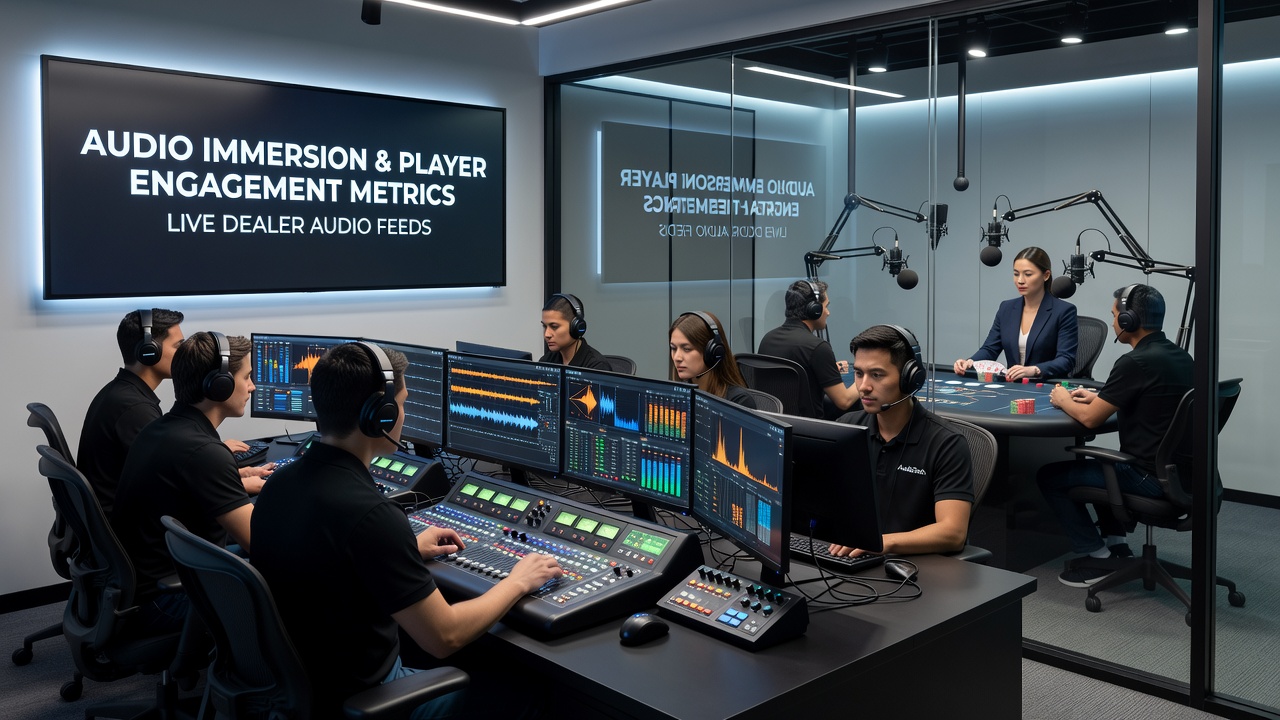
Operators track session duration, repeat visit frequency, and in-game decision time as indirect indicators of immersion, and several European operators reported measurable increases in average session length after upgrading to object-based audio pipelines in 2025. The European Gaming and Betting Association published aggregated figures showing that tables equipped with advanced audio processing retained remote participants 12 percent longer on average than tables using legacy stereo mixes during the same observation period.
Acoustic design also extends to the player side, where software clients allow users to adjust individual channel levels or enable head-tracking that rotates the virtual soundstage when the listener turns. These features rely on head-related transfer function filters calibrated for different ear shapes, and manufacturers continue to refine the filter sets based on larger participant databases collected through voluntary user studies.
Future Developments Scheduled for Late 2026
Manufacturers plan to introduce AI-assisted mixing tools that analyze dealer speech patterns and automatically duck ambient sounds during announcements, and field trials of these systems are slated to begin in September 2026 across selected studios serving North American and Asian markets. Integration with emerging low-latency 5G and satellite backhaul networks is expected to reduce one-way audio delay below 80 milliseconds, a threshold that current research identifies as the point where most listeners cease to perceive separation between local and remote sound sources.
Conclusion
Audio engineering practices in live dealer environments combine microphone technique, digital signal processing, spatial rendering, and network optimization to deliver consistent acoustic cues that support player immersion during remote table sessions. Continued refinement of these elements, including the object-based formats and AI-assisted mixing scheduled for broader deployment in September 2026, follows directly from performance data collected by operators and independent research groups. The technical requirements remain consistent across regions: preserve timing relationships, minimize perceptible latency, and maintain signal integrity under variable network conditions.